
Pocket Paws: My lovely dogs
Landmark Games LtdSimulation
4.5558.00 Reviews
- Version
- 1.3.9
- Installs
- 500.00K
- Age Rating
- Everyone
Screenshots

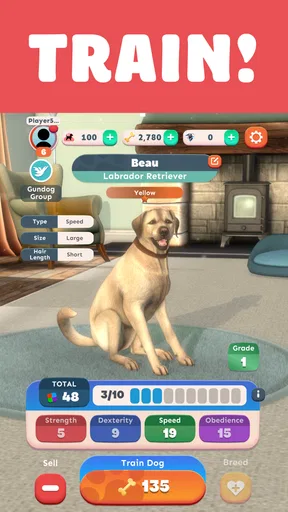
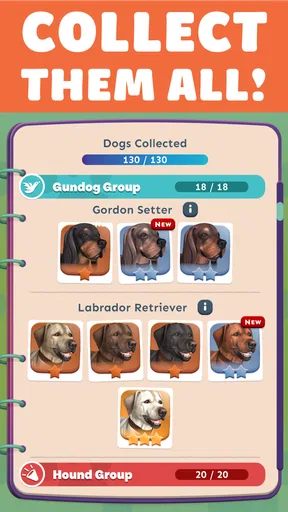
Our Review of Pocket Paws: My lovely dogs
 Analysis by Appyee
I spent time with Pocket Paws: My lovely dogs as a light dog-care game, and its appeal became clear quickly: it turns looking after virtual pets into a small routine rather than a demanding management project. You nurture dogs, train them, collect them, and return to familiar activities when you want something gentle to do. That makes it easy to recommend to someone who enjoys animal games but does not want a complicated simulation with a steep learning curve.
It is a free simulation game from Landmark Games Ltd, available for players rated Everyone. The game reached Android on February 23, 2024, and the current version is 1.3.9. It supports devices running Android 7.1 or newer, so it is aimed at a broad range of phones and tablets rather than only recent hardware. With a 4.5 average from around 5,000 ratings and more than 500,000 installs, it has already found a sizeable audience.
How the first goals shape the opening
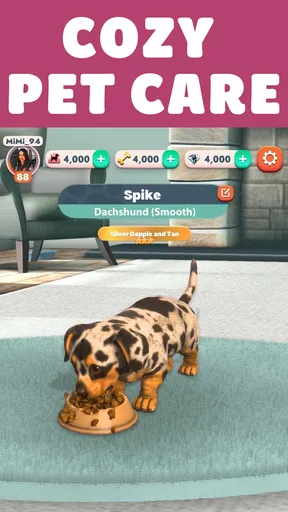
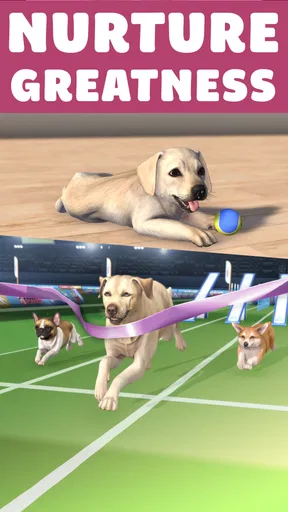
The early appeal comes from having a clear reason to keep interacting with your dogs. The basic loop is easy to understand: care for your pets, spend time training them, and build a collection that gives your progress a visible purpose. I never felt lost about the general idea, which matters in a casual game designed to be picked up for short sessions.
That simplicity is also the first important trade-off. If you expect a deep dog-training simulator with detailed behavioural modelling, complex schedules, or a large strategic layer, this is unlikely to satisfy you. Its goals are deliberately approachable. The pleasure comes from checking in, completing familiar pet-related activities, and seeing your collection develop, not from mastering a dense system.
I found the opening best suited to a relaxed player who wants an immediate activity after a busy day. For example, I could imagine opening it during a short break, caring for a favourite dog, doing a little training, and closing the game without feeling that I had abandoned a complicated plan. That low commitment is one of its strongest qualities.
The dog theme also gives the early tasks more personality than an abstract collection game. Even when the action is straightforward, the subject makes the routine feel warmer. Players who already enjoy virtual pets, animal collecting, or gentle mobile simulations will understand the attraction almost immediately.
What makes the collection meaningful
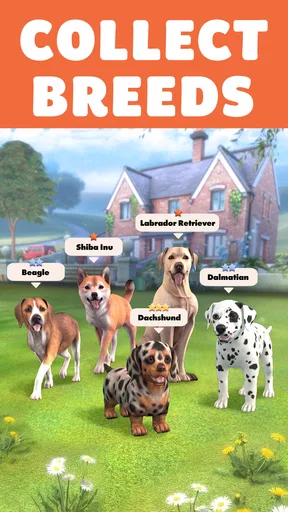
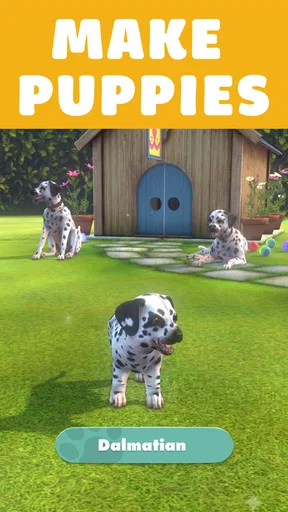
Collecting works best here as a long-term reason to return. A single dog can make the game pleasant, but the wider collection gives the player something to work toward beyond the next care activity. I like that the collection goal is easy to understand without turning the game into a spreadsheet.
There is a useful psychological balance in this structure. Training gives a sense of participation, while collecting supplies the broader direction. If I only wanted a pet-care moment, I could focus on the immediate interaction. If I wanted a longer-term objective, I could think about expanding and improving my group of dogs. Those two layers help the game avoid feeling completely empty after the novelty of the first session.
Still, this is not the right choice for someone who needs a strong story or a dramatic campaign. The collection itself is the motivation, and players who do not enjoy repeating care and training routines may find the goals too soft. I would choose a more narrative game if I wanted characters, plot twists, or a clearly staged adventure.
Progress signals and the satisfaction of small improvements
The most effective progress signal is the growing sense that your dogs are not just temporary objects on a screen. Caring for them and training them makes each interaction feel connected to the wider collection. Even without a heavy strategy layer, the game benefits from showing that time spent with a pet has a purpose.
This is where I think the game works better than a completely passive virtual-pet app. A passive app might be pleasant to open, but it can become little more than a reminder to check a meter. Pocket Paws gives the player more ownership because training and collecting sit alongside care. The result is still casual, but there is a clearer feeling of participation.
One practical tip is to treat the game as a sequence of short goals instead of trying to finish everything in one sitting. I found that approach more enjoyable because it keeps the routine light. Start by deciding whether today is mainly about caring for a dog, practising training, or working toward the collection. That small choice prevents the session from feeling like a repetitive checklist.
Another useful habit is to pay attention to what kind of progress you personally enjoy. Some players will care most about the collection, while others will prefer spending time with individual dogs. The game is more rewarding when you use those systems according to your preference rather than forcing yourself to pursue every available objective at once.
The signals are also accessible for younger players. The Everyone rating reflects the game’s broad, family-friendly positioning, and the straightforward pet theme is easy to understand. Parents should still remember that the game includes optional purchases, so a child using the device may need the usual purchase controls and supervision.
Where the pacing feels comfortable
Pocket Paws is strongest when played as a calm companion rather than as a game demanding constant attention. Its pacing gives the player room to return, complete a little care or training, and leave. That makes it a good fit for people who dislike mobile games that punish them for missing a long session or insist on rapid reactions.
The downside is that relaxed pacing can feel slow if you want frequent surprises. The game’s structure depends on the appeal of repeating a pleasant routine and gradually building a collection. Once that routine becomes familiar, your enjoyment will depend heavily on how much you like the dogs themselves and how satisfying you find incremental progress.
I would not install it expecting a competitive challenge. The attraction is personal progression, not proving that you are faster or more skilled than another player. That makes it less stressful, but it also means players searching for leaderboards, intense events, or demanding tactical decisions should look elsewhere.
How challenge develops without becoming overwhelming
The challenge curve feels designed around consistency rather than punishment. Caring for pets and training them gives you manageable actions, while collecting creates a longer horizon. The game does not need to make every moment difficult to keep a player interested; instead, it uses the satisfaction of gradual development.
That approach is suitable for beginners. I could recommend it to someone who usually avoids simulation games because they are worried about complicated controls or confusing resource systems. The dog-care focus is immediately readable, and the first steps do not require specialist knowledge.
Experienced simulation players may find the challenge modest. If you enjoy optimising production chains, balancing multiple competing resources, or making decisions with serious consequences, this game may feel too gentle. Its challenge is more about maintaining interest in the routine and choosing how to direct your attention than about solving difficult problems.
A good way to preserve the sense of challenge is to set your own priorities. Rather than rushing through every available activity, choose a collection target or focus on improving the bond with a particular dog. Self-directed goals are especially important in a game where the formal structure is intentionally easygoing.
This is also why I would be cautious about judging the game after only a few minutes. The opening is pleasant, but the real question is whether the care, training, and collection loop remains satisfying after the first impression fades. Players who enjoy gradual progress may find the rhythm comfortable. Players who need a constantly changing challenge may reach its limits sooner.
When the free model changes the experience
The game is free to download and play, which lowers the barrier to trying it. That is helpful for a casual title because you can discover whether the routine suits you before committing money. However, optional in-app purchases range from $0.49 to $124.99 per item, so the store model deserves attention even if you never intend to buy anything.
My advice is to decide in advance whether purchases are part of your experience. If you want Pocket Paws as a no-cost relaxation game, approach it with patience and accept that progress may be paced around the free experience. If you are comfortable spending, set a personal limit before browsing purchase options. The wide price range means this is not a detail I would ignore when recommending it to a child or to anyone trying to control mobile spending.
The free-to-play structure can also affect how you interpret progression. A slower route is not automatically a flaw in a casual collection game, but it can become frustrating if you feel pushed to pay simply to maintain momentum. I would judge the game on whether the unpaid routine remains enjoyable for you, not on how quickly a paying player might move through it.
This is one of the clearest cases where a different option may be better. If you want a completely purchase-free experience, a paid pet game may offer a cleaner relationship with progression, even if its initial cost is higher. If you prefer trying before buying, Pocket Paws has the advantage because the entry price is free.
Retention pressure and the reason to return
The game’s retention comes from three connected ideas: your dogs need attention, training gives you an active role, and the collection creates a reason to continue. That is a sensible structure for a pet simulation because each part supports the others. Care keeps the pets emotionally engaging, training makes the player do more than observe, and collecting gives the routine a destination.
I appreciate that this kind of retention can feel softer than the pressure used by many mobile games. The appeal is not only fear of losing progress or missing a limited opportunity. It is the simple wish to see how your dogs develop and what the collection becomes. For me, that makes the game easier to revisit without feeling that it has taken over my free time.
There is still a possible weakness: routine-based retention depends on personal attachment. If you quickly stop caring about the individual dogs, the remaining systems may not be enough to pull you back. This is not a game I would recommend to someone who needs a constant stream of new mechanics. Its strength is consistency, not endless reinvention.
A realistic everyday use case is a player who wants a five-minute reset between tasks. You can open the game, give attention to your pets, work on a small training objective, and leave with a modest feeling of progress. It also suits families looking for a simple animal-themed game, provided an adult manages the purchase settings and decides whether spending is allowed.
On the other hand, I would skip it if you are looking for a serious substitute for caring for a real dog. The game can imitate the idea of nurturing and training, but it should be treated as entertainment, not as instruction in real animal behaviour. Someone wanting detailed training education would be better served by a specialist resource or a more realistic simulation.
How it compares with familiar alternatives
Compared with a pure virtual-pet app, Pocket Paws has a broader sense of direction because training and collection give the player more to pursue than simply keeping one pet content. Compared with a management-heavy simulation, it is far easier to enter and less demanding to organise. That middle position is its identity.
It also differs from action-focused dog games. There is no reason to approach it as a reflex challenge or a competitive contest. The enjoyment comes from a steady pet-care loop, so players who prefer racing, combat, or rapid arcade play should not expect the same energy here.
Compared with a fully paid game, the free entry is convenient, but the purchase model may introduce more friction around progression. Compared with a subscription-based pet service, a free game is easier to sample, while the optional purchase range means families should be more deliberate about device settings. These are not deal-breakers, but they affect which alternative makes sense for you.
The best comparison is therefore not “which game has the most features?” It is “which kind of routine do I want?” Choose this one if you want dogs, light training, collection, and a forgiving pace. Choose something else if you want a deep simulation, a strong story, competitive pressure, or a straightforward one-time payment.
My progression verdict after settling into the routine
As a progression-focused simulation, Pocket Paws succeeds because its goals are easy to understand and its rewards are tied to a theme people naturally find appealing. The early care activities introduce the idea, training adds participation, and collecting gives the player a reason to continue. The pacing is gentle enough for casual sessions, while the collection provides a longer-term direction.
Its limitations are equally clear. The challenge may feel too mild for serious simulation fans, and the routine can lose its pull if you do not become attached to the dogs. The free-to-play structure also deserves sensible boundaries because individual purchases range from less than a dollar to well over a hundred dollars. I would not describe those factors as reasons to avoid the game entirely, but they should shape your expectations.
Landmark Games Ltd has made something that is easiest to enjoy when you let it remain a small part of your day. I would recommend it to virtual-pet fans, younger players with adult purchase supervision, and anyone who wants a friendly collection game that does not demand intense concentration. I would steer strategy enthusiasts and players seeking a detailed canine simulator toward a more complex alternative.
My final take is that the progression is pleasant rather than demanding. The game gives you enough direction to make each visit feel worthwhile, but it does not try to turn dog care into a high-pressure obligation. If that balance sounds appealing, the free download makes it easy to test the routine for yourself. If you need deep systems or constant novelty, you will probably recognise its limits quickly.
Verdict
Strengths of Pocket Paws: My lovely dogs
- Relaxing gameplay suited to short, casual sessions.
- Cute dog designs make the game appealing to animal lovers.
- Simple controls are easy for younger players to understand.
- Collecting different dogs gives the game a pleasant sense of progress.
- Works well as a low-pressure break from more demanding games.
Limitations of Pocket Paws: My lovely dogs
- Progress may feel repetitive after caring for several similar dogs.
- Some content or items may require in-app purchases.
- Limited challenge may not satisfy players seeking deep gameplay.
- Frequent notifications could become distracting if left enabled.
- An internet connection may be needed for certain features or updates.
Similar Picks in This Category
View All
Truckers of Europe 3
Wanda Software4.3

Town Building Life Simulator
XGame Global4.2

Fidget Toys Trading・Pop It 3D
Freeplay Inc4.7

Sculpt People
CrazyLabs LTD4.4

Scary Teacher 3D
Z & K Games4.2

Hair Tattoo: Barber Shop Game
CASUAL AZUR GAMES4.3
Frequently Asked Questions
What is Pocket Paws: My lovely dogs?
Pocket Paws: My lovely dogs is a casual virtual-pet game centered on caring for adorable dogs. Players can usually interact with their pets, keep them happy, customize their appearance or surroundings, and complete simple activities. The experience is designed to be relaxing and accessible, making it suitable for players who enjoy cute animal games rather than fast-paced competition or complex strategy.
How do you play Pocket Paws: My lovely dogs?
Gameplay focuses on looking after your virtual dogs and spending time with them. Depending on the available features, you may need to feed, clean, play with, or otherwise care for your pets while completing activities and unlocking cosmetic options. The controls are generally easy to understand, so new players can begin quickly, although regular attention may be needed to maintain your dogs’ happiness and progress.
Is Pocket Paws: My lovely dogs free to download and play?
Pocket Paws: My lovely dogs may be available as a free download, but the exact pricing model can vary by platform, region, and version. Free games of this type may include optional in-app purchases for items, currency, customization, or faster progress. Before downloading, check the store listing for current purchase details and review your device’s parental-control settings if children will be playing.
Does Pocket Paws: My lovely dogs require an internet connection?
The game may allow some basic pet-care features to work offline, but an internet connection can be necessary for advertisements, cloud synchronization, updates, special events, or in-app purchases. Offline availability may also differ between Android and iOS versions. If you plan to play while traveling or without reliable data, test the game after installation and check whether progress is saved correctly.
Is Pocket Paws: My lovely dogs suitable for children?
Its cute presentation and straightforward virtual-pet gameplay can make Pocket Paws: My lovely dogs appealing to children and families. However, parents should check the age rating, advertising, data-collection information, and in-app purchase options before allowing independent play. Some tasks may encourage frequent returns to the game, so setting spending limits and screen-time rules is recommended for younger players.
Play our best games!


